· RFP · 4 min read
Security Questionnaires in RFP Responses: How to Answer Them Faster
Learn how recurring security and compliance questions fit into broader RFP workflows, and how lean proposal teams can answer them faster without rebuilding the same content every time.
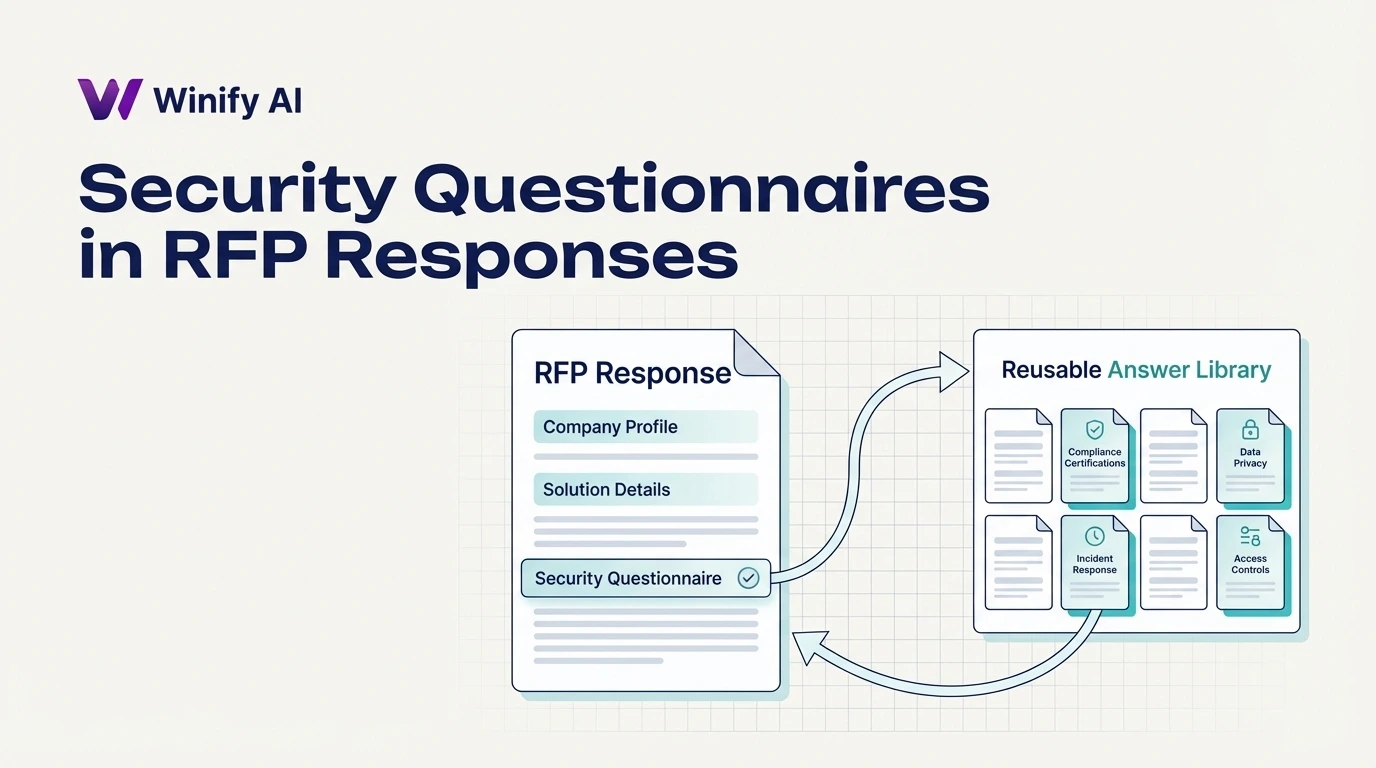
Security and compliance questions still show up in many client proposals. But for a lot of small and mid-sized teams, they are not a standalone business process — they are one recurring section inside a broader RFP response workflow.
That distinction matters.
If your team treats every security questionnaire like a completely separate project, you end up splitting work across documents, rebuilding the same answers, and slowing down the rest of the proposal. A better approach is to handle those questions inside the same structured workflow you already use for the full response.
Table of Contents
- What Is a Security Questionnaire in Practice?
- Why These Questions Slow Proposal Teams Down
- How to Answer Recurring Security Questions Faster
- What Good Workflows Have in Common
- How Winify AI Helps
- Final Thoughts
What Is a Security Questionnaire in Practice?
A security questionnaire is a set of questions buyers use to assess how your company handles security, compliance, privacy, access controls, operational maturity, and related delivery risk.
Sometimes it arrives as a standalone spreadsheet or PDF. Sometimes it appears as one section inside a longer RFP. In both cases, proposal teams often face the same challenge: many of the questions are familiar, but answering them still takes too long.
Typical themes include:
- data handling and storage
- access controls
- incident response
- encryption and authentication
- business continuity
- compliance posture
- internal policies and review processes
For many service businesses, agencies, consultancies, and software firms, these questions are not rare exceptions. They are recurring parts of the normal proposal process.
Why These Questions Slow Proposal Teams Down
The work is rarely difficult because the answers are conceptually new. It is slow because the workflow is usually messy.
Common bottlenecks include:
- approved answers spread across old proposals and folders
- repeated copy-paste from stale documents
- compliance and security wording that changes slightly across writers
- buried questions inside long narrative documents
- separate spreadsheets or email threads that break the main proposal workflow
That is why these sections often feel heavier than they should. The real problem is usually not the question itself — it is the lack of a reusable system around it.
How to Answer Recurring Security Questions Faster
1. Keep approved source material in one place
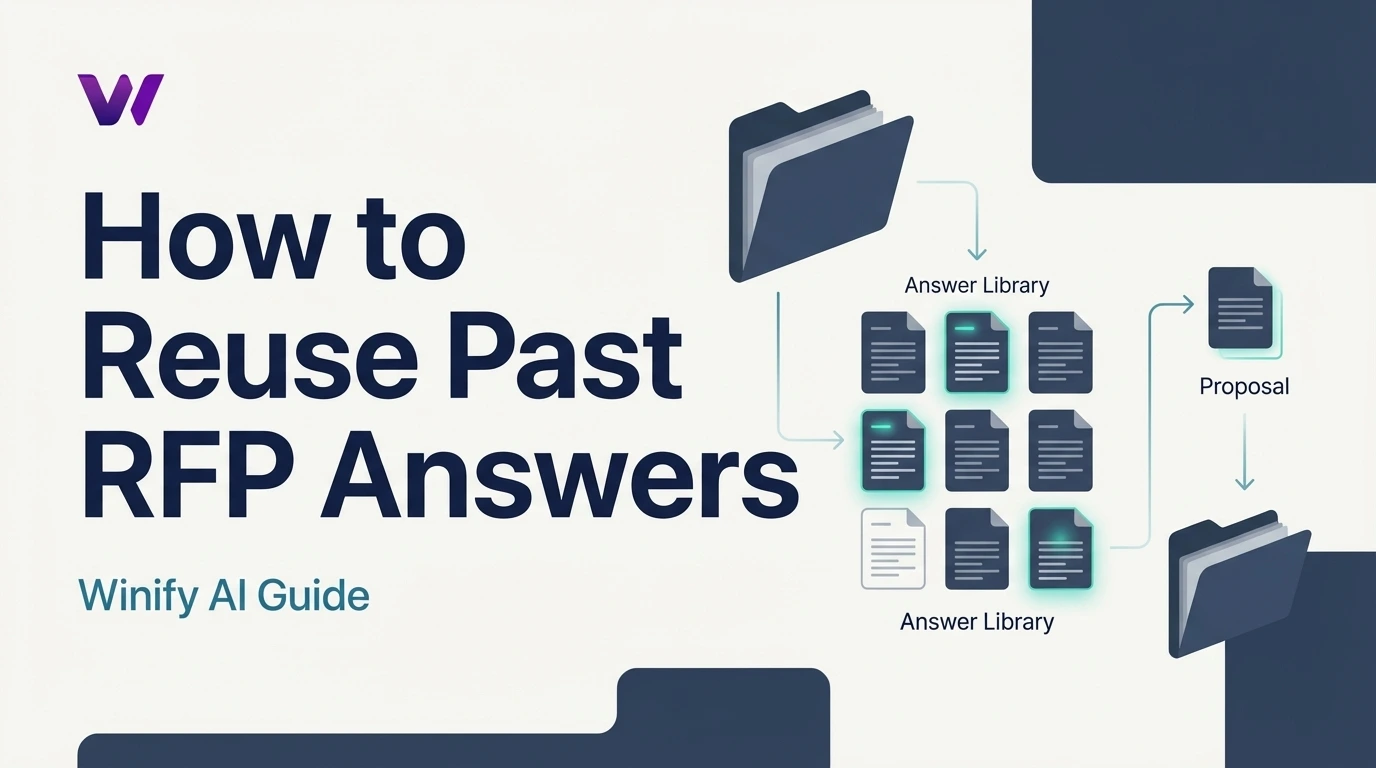
Store approved answers, policy summaries, service descriptions, and past proposal content somewhere your team can actually reuse it. A good answer library makes future drafting faster and safer.
2. Work from the full proposal structure
If the questionnaire is part of a broader RFP, keep it inside the same response workflow. When requirements are already structured in a compliance matrix, your team is less likely to miss dependencies or duplicate work.
3. Reuse wording carefully
Recurring security questions often look different on the surface but ask for the same underlying proof. Reusing approved language gives you a stronger baseline, as long as your team still reviews for buyer-specific context.
4. Draft faster, then review
AI can help accelerate first drafts, but it works best when grounded in trusted source material from past proposals and internal documents. Generic drafting without that source layer usually creates more cleanup work.
5. Keep security answers tied to the proposal outcome
The goal is not to complete a standalone admin task. The goal is to submit a complete, credible proposal on time. Security and compliance sections should support that broader response, not become a disconnected workflow.
What Good Workflows Have in Common
The strongest proposal teams usually do a few things well:
- they start from a structured response plan, not a blank document
- they reuse approved content instead of reinventing it
- they keep recurring security and compliance questions inside the broader proposal workflow
- they review carefully before finalizing buyer-facing answers
That combination tends to be much more effective than handling every security section as a separate manual scramble.
How Winify AI Helps
Winify AI is built for lean proposal teams that want to move faster across the full response workflow.
That means teams can:
- upload one real RFP and build the compliance matrix automatically
- reuse approved past proposal content and supporting company documentation
- draft recurring security and compliance sections faster
- keep answers more consistent across proposals
- move from raw requirements to submission-ready responses with less rewriting
If your team regularly answers similar security questions inside client proposals, the real leverage usually comes from integrating that work into the broader proposal process — not spinning it off into a separate, heavier workflow.
💡 See how Winify AI helps lean teams respond faster to RFPs
Final Thoughts
Security questionnaires are still part of many proposal processes. But for most lean teams, the smarter move is not to treat them like a separate universe.
Treat them as one recurring part of the same broader response workflow: structure the requirements, reuse approved content, generate stronger drafts faster, and keep the whole proposal moving.
Want a faster way to handle recurring security and compliance questions inside your proposal workflow? Start your free trial today.
- security questionnaire
- rfp response
- proposal workflow
- compliance
- answer library