RFP Automation Software
RFP automation software that turns one upload into a review-ready proposal workflow for lean teams.
Upload the RFP, extract the requirements, reuse approved source material, and hand reviewers a stronger first draft without pretending automation replaces judgment.
Where automation saves time first
- • Extract requirements into a working response plan instead of rebuilding the RFP by hand
- • Pull approved answers from past proposals and company documents faster
- • Generate a reviewer-ready first draft that still expects human judgment
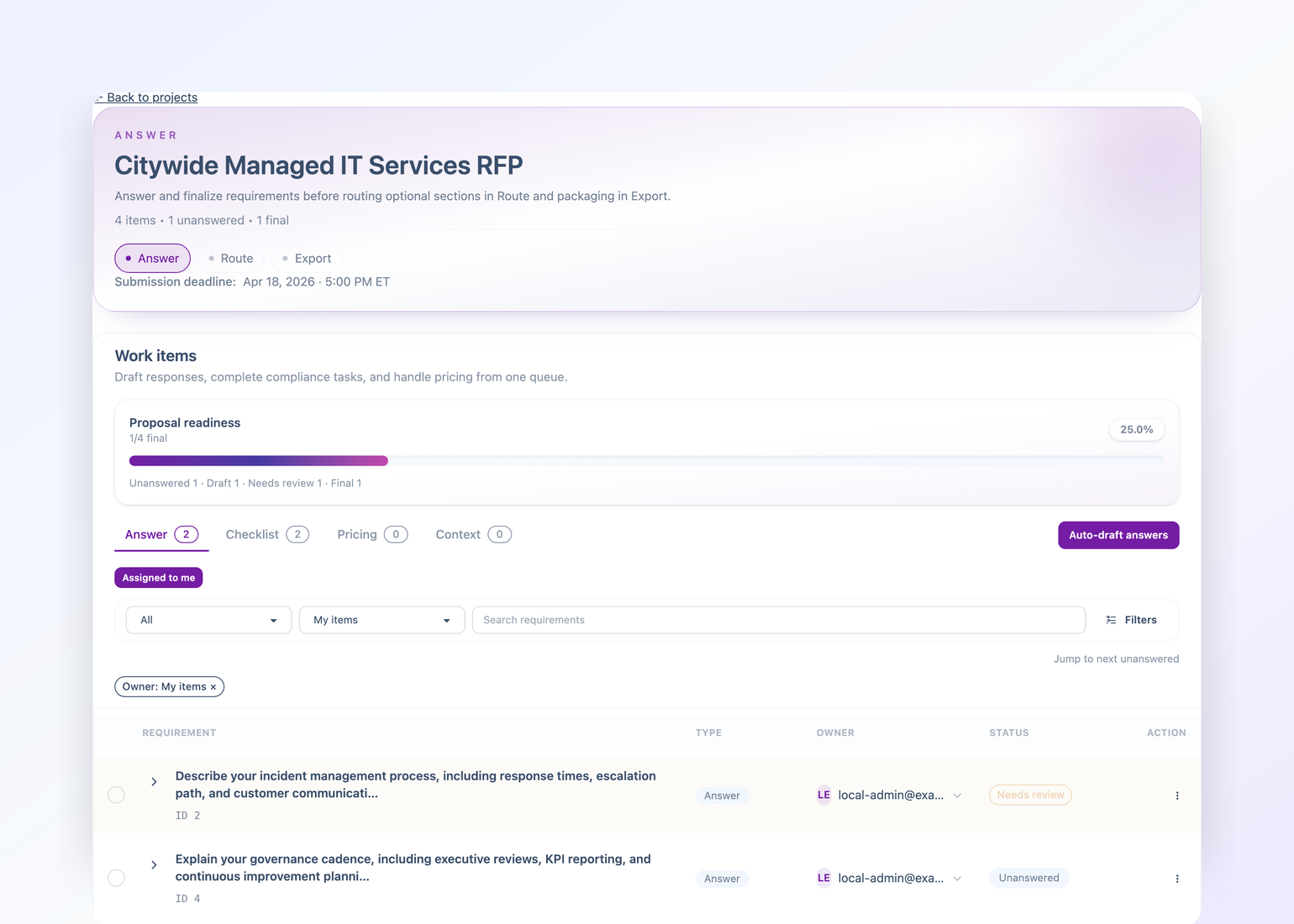
What should actually be automated
Automate intake, content reuse, and first-draft assembly before anything else
The practical goal is simple: reduce setup work, reuse trusted content faster, and make the handoff into review more obvious without adding another layer of process.
Turn the RFP into a working response plan
Pull the important requirements and sections into a structured workflow so the team is not stuck parsing long buyer documents by hand.
Ground drafts in approved source material
Reuse past proposals, service descriptions, and approved company language instead of relying on generic one-off prompts.
Draft faster without hiding the source material
Generate a usable first draft more quickly while keeping reviewer judgment in the loop for buyer fit, accuracy, and final polish.
Keep the team aligned on one workflow
Give writers and reviewers a shared response flow instead of juggling spreadsheets, copied docs, and disconnected notes.
Start with a template when the team still works in docs
Use the live RFP response template when the immediate need is a repeatable document before the workflow moves into software.
Connect automation to the answer library
Pair automation with the proposal answer library so every draft starts from trusted source material, not a blank page.
What should happen after an RFP is uploaded?
The strongest automation workflows remove setup friction first, then make the path from approved content to a reviewable draft easy to follow.
RFP automation software should help proposal teams spend less time rebuilding the same workflow over and over. In practice, that means structuring the requirements faster, retrieving trusted past answers faster, and producing a usable first draft faster.
That does not mean a no-touch response process. Teams still need review, refinement, and buyer-specific judgment. The value is in removing the repetitive setup work that slows lean proposal teams down before the real thinking starts.
1. Intake
Upload the live RFP and turn the sections, requirements, and deadlines into a working response plan.
2. Ground the draft
Pull approved language from past proposals, company documents, and the answer library before drafting begins.
3. Review
Hand reviewers a faster first draft so they can focus on buyer fit, gaps, and final polish instead of repetitive setup.
If requirement tracking is the main bottleneck, start with the compliance matrix workflow. If finding approved source material takes too long, use the proposal answer library. If you need the connected intake-to-draft flow, explore the broader RFP response software page.
If your team still begins in documents, use the free RFP response template as the starting structure, then move into automation once repeated drafting and review become the real cost center.
Useful next steps in the same workflow
- • Build the requirements plan with the compliance matrix workflow
- • Reuse trusted material inside the proposal answer library
- • Start from a live document with the RFP response template
Without focused automation
Teams rebuild matrices by hand, search old folders for decent language, and rewrite familiar answers under deadline pressure.
With Winify AI
The workflow becomes more repeatable: requirements are structured faster, approved content is easier to find, and first drafts move sooner.
Best fit
Best for teams with repeatable proposal work and reusable content
The strongest fit is when your team answers similar buyer questions repeatedly and needs leverage without turning the workflow into a heavyweight rollout.
Lean proposal teams
Useful when a small response team needs speed and consistency more than another enterprise process layer.
Service and consulting businesses
Strong fit for teams that repeatedly explain capabilities, delivery approaches, staffing, and company background in proposals.
Teams with approved past answers
Best when strong proposal content already exists but is scattered across old bids, docs, and shared drives.
Workflows that still need review
Helpful when teams want faster drafting without pretending automation should replace reviewer judgment.
What the automation handoff looks like in practice
Automation works best when the move from structure to grounded draft to human review is obvious.
Step 1: upload the live RFP and turn it into a clear requirements plan instead of starting with a manual spreadsheet rebuild.
Step 2: pull in trusted source material from past proposals, service descriptions, and approved company language so the response is grounded before drafting starts.
Step 3: generate a faster first draft, then hand it to human reviewers for fit, refinement, and final polish.
This is the workflow promise behind RFP automation software: fewer manual rebuilds, faster reuse of approved answers, and a draft that is easier to review because the setup work is already done.
The right starting point is the stage where repetitive work is costing your team the most time: structure, content reuse, full workflow, or the template-first path.
RFP Automation Software FAQs
Common questions from teams evaluating workflow automation
What does RFP automation software automate?
RFP automation software helps teams automate repetitive steps like extracting requirements, organizing questions, reusing approved content, and generating stronger first drafts faster.
Does automation mean zero human review?
No. In practice, good RFP automation reduces repetitive manual work and speeds up drafting, but human review is still important for buyer fit, accuracy, and final polish.
How is this different from generic AI writing tools?
Winify AI is designed around proposal-response workflows. It works from your past proposal content and approved source material instead of relying only on one-off prompts.
Who is RFP automation software best for?
It is especially useful for lean proposal teams and service businesses that repeatedly answer similar RFP questions and want a more repeatable workflow without heavy enterprise software.
How does RFP automation fit into the complete response process?
Automation handles repetitive work such as requirement extraction, content retrieval, and first-draft creation. The complete RFP response workflow also includes review, collaboration, and final submission preparation.
See what RFP automation looks like in a review-ready workflow
Structure the requirements, reuse approved content, and move into a stronger first draft faster.